Sleep Apnea and Accelerated Aging: The Hidden Longevity Risk
Most people with obstructive sleep apnea do not know they have it. For a longevity protocol, few undiagnosed conditions undermine progress as thoroughly or as silently.
Educational content — not medical advice. This article is informational only and does not replace personalized care from a qualified healthcare professional. Read our full medical disclaimer.
A person can optimize training, nutrition, supplementation and stress management with real discipline and still see inflammatory markers stay elevated, blood pressure resist improvement and recovery metrics stall. When that pattern appears in someone doing everything right, obstructive sleep apnea is one of the first things worth ruling out.
It is common, frequently undiagnosed, mechanistically connected to several hallmarks of aging, and — importantly — treatable.
What obstructive sleep apnea is
During sleep, the muscles of the upper airway relax. In obstructive sleep apnea the airway narrows or collapses entirely, repeatedly, interrupting airflow despite continued effort to breathe. Each event ends with a brief arousal — usually too short to be remembered — that restores muscle tone and airflow.
This can happen a handful of times an hour or, in severe cases, more than thirty. Severity is graded by the apnea-hypopnea index, the number of events per hour of sleep.
The person experiencing it typically has no memory of any of it. They know only that they slept a full night and feel unrested.
Why high performers are so often missed
Obstructive sleep apnea has a stereotype: older, overweight, loud snorer, visibly sleepy during the day. That stereotype causes systematic underdiagnosis.
- Symptoms get attributed elsewhere. Morning fatigue, afternoon energy crashes, irritability and reduced concentration are read as stress, workload, age or "just how it is at 45."
- Fit people get it too. While excess weight is a major risk factor, apnea also occurs in lean individuals, driven by craniofacial anatomy — a narrow jaw, recessed chin, large tonsils, high-arched palate, nasal obstruction — that is entirely independent of body composition.
- Daytime sleepiness is not universal. Many people with significant apnea do not describe themselves as sleepy, particularly high-drive individuals who compensate with caffeine and momentum.
- The person cannot self-report. Without a partner to observe gasping or pauses, and living alone or with someone who sleeps separately, there is no witness.
- Presentation differs by sex. Women more often report insomnia, fatigue, headaches and mood symptoms rather than classic snoring and witnessed apneas, contributing to lower diagnosis rates.
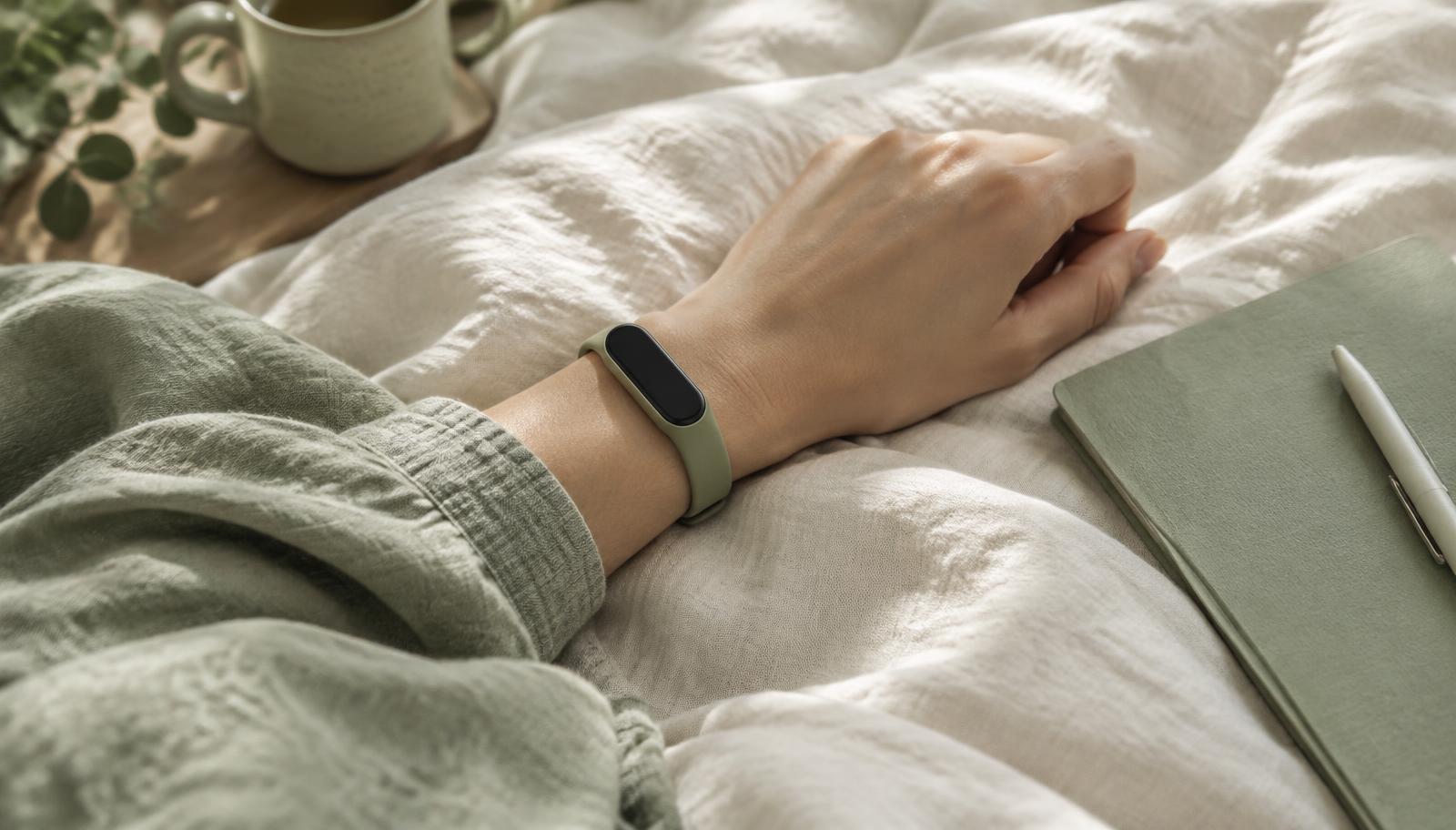
- Wearables are suggestive, not diagnostic. Some devices flag breathing disturbances or overnight oxygen dips, which can prompt investigation, but they do not confirm or exclude the condition.
The mechanisms connecting apnea to accelerated aging
This is not a vague "sleep is important" claim. The mechanisms are specific and overlap directly with pathways discussed in aging biology.
- Intermittent hypoxia. Repeated cycles of oxygen desaturation and reoxygenation generate reactive oxygen species in a pattern resembling ischemia-reperfusion injury. Chronic oxidative stress of this kind damages lipids, proteins and DNA.
- Systemic inflammation. Intermittent hypoxia activates inflammatory signaling pathways, and people with untreated apnea consistently show elevated inflammatory markers. This connects to the low-grade chronic inflammation described in our article on chronic stress and inflammation.
- Sympathetic overactivation. Each arousal triggers a surge in sympathetic nervous system activity. Repeated hundreds of times nightly, this drives sustained blood pressure elevation, including the loss of normal nocturnal blood pressure dipping, and suppresses heart rate variability.
- Sleep architecture fragmentation. Constant micro-arousals reduce time in deep slow-wave sleep and REM, which are the stages associated with growth hormone release, memory consolidation and glymphatic clearance in the brain.
- Metabolic disruption. Untreated apnea is associated with insulin resistance and impaired glucose tolerance independent of body weight, and interacts bidirectionally with weight gain.
- Endothelial dysfunction. The combination of oxidative stress and blood pressure surges impairs vascular endothelial function, a recognized early step in cardiovascular disease.
Each of these maps onto a recognized hallmark of aging. Apnea is essentially a nightly stress test applied to several of them simultaneously.
What research on biological age markers shows
A growing body of work has examined biological aging markers in people with untreated sleep apnea, and the direction of findings is consistent.
- Studies using epigenetic clocks have generally found accelerated epigenetic age in people with more severe untreated apnea, with some analyses reporting that greater severity or greater overnight hypoxic burden is associated with greater acceleration. Our article on epigenetic clocks explains what these measures do and do not capture.
- Telomere length has been examined in several studies, with a number reporting shorter telomeres in untreated apnea, though findings are less uniform.
- Inflammatory and oxidative stress markers are elevated in a dose-dependent relationship with severity in much of this literature.
- Some studies examining treated patients have reported improvement in certain markers after sustained therapy, which is encouraging but preliminary — sample sizes are small and follow-up is limited.
These are associations, and untreated apnea coexists with other risk factors that are hard to fully separate. But the mechanistic plausibility is unusually strong, which is what makes the association more persuasive than a typical correlational finding.
Warning signs that justify a sleep study
Worth investigating if several of these apply:
- Loud habitual snoring, particularly with observed pauses, gasping or choking.
- Waking unrefreshed despite adequate time in bed.
- Morning headaches.
- Frequent nighttime urination, which is often overlooked as an apnea symptom.
- Persistently low overnight HRV or an elevated resting heart rate during sleep on a wearable.
- Hypertension that responds poorly to treatment, particularly if blood pressure does not dip at night.
- Difficulty losing weight despite genuine adherence.
- Reduced concentration, mood changes or irritability without another explanation.
- Nighttime reflux or teeth grinding, both associated with apnea.
- Anatomical risk factors: narrow jaw, chronic nasal obstruction, large neck circumference, enlarged tonsils.
None of these is diagnostic alone. Several together warrant a formal evaluation.
Testing and treatment
In-laboratory polysomnography remains the diagnostic standard, measuring brain activity, eye movement, muscle tone, airflow, respiratory effort, oxygen saturation and heart rhythm simultaneously. It is the most complete assessment and can identify conditions other than apnea.
Home sleep apnea tests are more limited — typically airflow, effort, oxygen saturation and pulse — but are considerably more accessible and are validated for diagnosing moderate to severe obstructive apnea in people with high pretest probability and no significant comorbidities. A negative home test in a symptomatic person does not exclude the condition and usually warrants in-laboratory follow-up.
Treatment depends on severity and anatomy:
- CPAP remains the most effective treatment, holding the airway open with pressurized air. Modern devices are far quieter and better tolerated than earlier generations, and mask fit is the main determinant of adherence.
- Mandibular advancement devices, fitted by a dentist with sleep training, advance the lower jaw and are a reasonable option for mild to moderate apnea or CPAP intolerance.
- Positional therapy helps the subset whose events occur predominantly when supine.
- Weight reduction can substantially decrease severity where excess weight contributes, though it rarely resolves anatomically driven apnea.
- Treating nasal obstruction — allergy management, septal correction — improves both apnea severity and CPAP tolerance.
- Surgical and neurostimulation options exist for selected cases and are decided specialist by specialist.
- Alcohol avoidance in the evening matters, since alcohol relaxes airway muscles and worsens events.
Why screening belongs in any serious longevity evaluation
The argument is straightforward. Sleep apnea is common, often silent, mechanistically linked to multiple aging pathways, and treatable. A protocol that measures epigenetic age, inflammatory markers and cardiovascular risk while leaving several hundred nightly hypoxic events unexamined is measuring the consequences of a problem it has not looked for.
It is also the clearest case of an intervention hierarchy problem. There is no supplement, peptide or training block that compensates for untreated apnea, and the foundations discussed in our article on sleep and longevity cannot be built while the airway is closing hundreds of times a night. Our longevity framework places screening for structural sleep disorders ahead of optimization, precisely because the return on correcting a large unrecognized problem exceeds the return on refining an already functional system.
This article is educational and does not constitute medical advice. Sleep apnea requires diagnosis and management by qualified medical professionals; if you recognize these symptoms, discuss a sleep evaluation with your physician.